How Audible Credits Work: Expiry, Refunds, Extra Credits & More

How Does Audible Credits Work?

Audible credits are probably the most confusing part of the entire platform for new users.

People often wonder:

  • Do credits expire?
  • Can unused credits roll over?
  • What happens after cancellation?
  • Can credits be refunded?
  • Are credits actually better than buying audiobooks directly?

After using Audible for years, I have realized that most people initially overcomplicate how credits work. In reality, the system becomes fairly simple once you understand a few basics.

This guide will explain how Audible credits actually work in real life, including expiration rules, rollover limits, refunds, extra credits, and the best ways to get maximum value from them.

Table of Contents

What Are Audible Credits?

Audible credits are basically Audible’s internal currency used to get audiobooks.

The system is simple:

1 credit usually gets you 1 audiobook regardless of price.

So even if an audiobook costs $35 individually, you can still usually get it using a single credit.

Credits are included with Audible Premium Plus memberships, where users receive monthly or yearly credits depending on their plan.

For example:

Membership PlanCredits Included
Premium Plus Monthly1 credit/month
Premium Plus 2 Credits2 credits/month
Annual Plans12 or 24 credits/year

Once you use a credit to get an audiobook, that book usually becomes a permanent part of your library.

Credits are generally used to permanently purchase audiobooks, not temporarily rent them.

Another thing many beginners confuse is the difference between credits and the Plus Catalog.

  • Credits buy audiobooks permanently
  • Plus Catalog titles are temporary streaming content
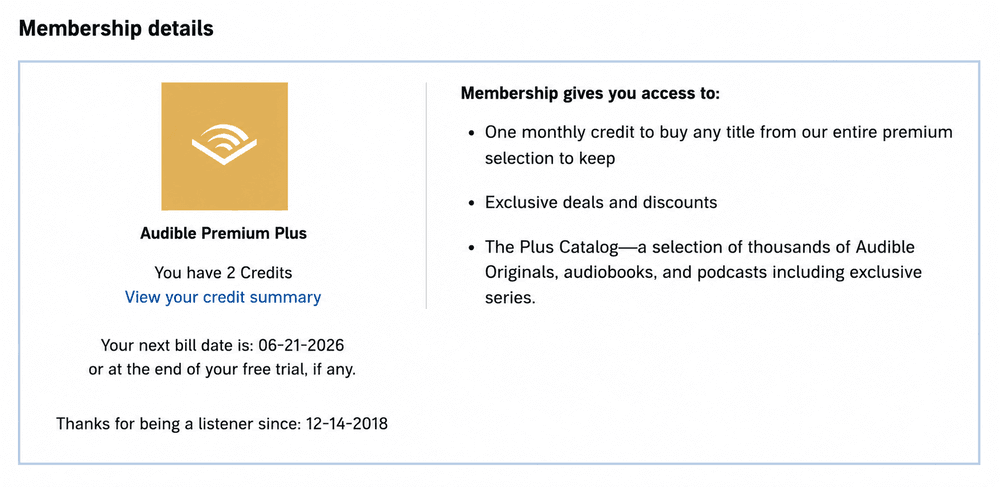
Audible Membership Details and Credits

Why Audible Credits Can Be Worth It

The biggest reason many Audible users prefer credits is simple:

Credits often give much better value than buying audiobooks directly.

For example, an audiobook that normally costs $25–40 can still usually be purchased using just one credit.

That is why many experienced users save credits for:

  • expensive audiobooks
  • long books
  • premium new releases
Real Example of Credit Value:

In the screenshot below, Project Hail Mary costs:

  • $24.73 for Audible members
  • while non-members pay $35.34

But the same audiobook can also be purchased using:

just 1 Audible credit

Screenshot Showing Audible Credit vs Purchase price

Note: Audible pricing, discounts, and member offers can change over time depending on promotions, region, and marketplace.

Another thing many beginners miss is that Audible members also usually receive:

  • around 30% member discount
  • and sometimes even larger discounts during Audible sales.

That is why comparing the discounted member price with the value of a credit before purchasing an audiobook is usually the smarter approach.

If a book is heavily discounted, paying directly can sometimes make more sense than using a credit.

For example:

  • using a credit on a short $7 audiobook usually feels wasteful
  • while using it on a premium $25–40 audiobook often feels like excellent value

Long audiobooks especially tend to offer better overall value per credit.

Quick Tip

Save credits for expensive audiobooks instead of cheaper short titles whenever possible.

Do Audible Credits Expire?

Yes, Audible credits usually expire if left unused for too long.

For most standard Audible memberships purchased directly through Audible/Amazon, credits typically expire 12 months after they are issued.

This is one of the most frustrating things many users discover too late. People often keep saving credits for later, only to suddenly realize some of them disappeared.

Unused Audible credits usually do not stay forever.

The exact rules can vary slightly depending on:

  • your country
  • billing method
  • and membership type

But for regular US Audible memberships, the general 12-month expiry rule applies to most credit types.

Screenshot Showing Credit Details Including Expiry

You can usually check:

  • your available credits
  • and upcoming expiry dates

inside:

  • the Audible app
  • account details
  • or membership settings page.

Credit TypeWhat It MeansExpiry Rule
Membership CreditsCredits included with regular Audible Premium Plus plansUsually expire after 12 months
Extra Purchased CreditsAdditional credit bundles bought separatelyUsually expire after 12 months
Apple App Store CreditsCredits received through Apple-billed Audible membershipsDo not expire
Google Play Store CreditsCredits received through Google Play billed membershipsDo not expire
Returned CreditsCredits restored after returning an audiobookUsually expire after 12 months

Interesting Exception

Credits from Audible memberships billed through Apple App Store or Google Play usually do not expire the same way standard Audible website membership credits do.

These app-store billed credits can often remain in the account even after cancellation, unlike regular Audible memberships where unused credits are usually lost after expiry or cancellation.

Source: Audible official help page

Another thing many beginners confuse is the difference between:

  • expiring credits
  • and permanently owned audiobooks

Even if your unused credits expire, audiobooks already purchased using those credits usually remain permanently available in your library.

Do Audible Credits Roll Over?

Yes, Audible credits usually roll over if you do not use them immediately.

For example, if your US Audible Premium Plus Monthly plan gives you 1 credit every month, unused credits normally carry forward instead of disappearing at the end of that month.

However, there are two important limits many users do not realize:

  • credits usually expire after 12 months
  • Audible also has a maximum accumulation limit depending on your plan and region

For US monthly Premium Plus plans, users can generally accumulate up to 6 unused credits at once.

So in real life, rollover does exist, but it is not unlimited.

For example:

  • Month 1 → 1 unused credit
  • Month 2 → 2 credits
  • Month 3 → 3 credits

…and so on until the rollover limit is reached.

This is one reason some users suddenly realize they stopped receiving new credits. In many cases, they simply hit the accumulation limit without noticing.

Personally, I think the best approach is simple:

Do not hoard Audible credits unnecessarily. Use them regularly before they expire.

What Happens to Credits After Cancellation?

This is one of the most important things Audible users should know before cancelling their membership.

Unused Audible credits are usually lost once your membership is cancelled.

Many people assume their remaining credits will stay safely in the account forever, but that is normally not how Audible works.

However, audiobooks already purchased using credits usually remain permanently available in your library even after membership ends.

That is the important distinction.

This is why experienced Audible users almost always use their remaining credits before cancelling.

Screenshot showing Unused Credits While Cancelling Membership

Before cancelling Audible, check your unused credits and spend them first.

Audible also offers a “pause membership” option in some regions. This can sometimes be a better alternative if you already have a backlog of audiobooks but do not want to lose credits immediately.

Can You Buy Extra Audible Credits?

Yes, Audible allows eligible members to buy extra credits.

This feature usually becomes available once:

  • you are an active Audible Premium Plus member
  • and have used most or all of your existing credits

In the US Audible marketplace, extra credits are commonly sold in bundles such as:

  • 3 extra credits

The pricing varies slightly over time and between regions.

Many regular listeners use extra credits when:

  • they finish books quickly
  • want to continue a series immediately
  • or find several audiobooks they want during a sale

Personally, I think buying extra credits only makes sense if:

  • you actively listen to audiobooks regularly
  • and the credit cost is still cheaper than buying books individually

Because sometimes Audible sale pricing can actually become cheaper than using a credit.

Can You Refund Audiobooks Bought With Credits?

Yes, Audible does allow users to return some audiobooks purchased with credits.

If approved, the used credit is usually returned back to your account.

This policy exists because sometimes:

  • narrators may not suit your taste
  • the audiobook quality may disappoint you
  • or you simply realize the book is not for you after listening

Honestly, this is one of the better things about Audible compared to many other digital content platforms.

However, Audible also monitors return activity.

The return system is meant for genuine dissatisfaction, not for treating Audible like a free audiobook rental service.

Some users misuse the policy by:

  • repeatedly finishing books and returning them
  • excessively exchanging audiobooks
  • abusing bulk returns

As a result, Audible can sometimes:

  • limit return eligibility
  • remove self-service returns
  • or ask users to contact support manually

In my experience, occasional genuine returns are usually not a problem. But excessive returns can eventually trigger restrictions.

Best Ways to Use Audible Credits

Over time, most regular Audible users develop their own strategy for using credits wisely.

Personally, I think the best value usually comes from using credits on:

  • expensive audiobooks
  • very long audiobooks
  • premium new releases
  • or books you know you genuinely want to keep

For example:

Usually Good Credit ValueUsually Poor Credit Value
30-hour fantasy audiobook1-hour short audiobook
Expensive new releaseCheap sale title
Popular nonfiction bestsellerAudiobook already discounted heavily

Long audiobooks especially tend to give excellent value per credit.

Another thing many beginners miss is that Audible sales can sometimes make direct purchases cheaper than using a credit.

So before spending a credit, many experienced users quickly compare:

  • the audiobook’s sale price
  • vs the effective value of a credit

Expensive Audible Title - Use Credit

For instance, in the example above, The Ballad of Falling Dragons costs nearly $40 even for Audible members, so using a single credit would usually feel like a much better deal.

Quick Tip

If an audiobook costs less than your typical per-credit value, paying directly can sometimes make more sense than using a credit.

Personally, I also try not to hoard credits unnecessarily.

Because once credits start piling up:

  • expiry becomes stressful
  • purchases become rushed
  • and people often end up buying books they never actually listen to.

Things That Still Confuse Many Audible Users

Even after using Audible for years, there are still a few things about credits and memberships that regularly confuse people.

One of the biggest is the difference between:

  • Audible credits
  • and the Plus Catalog

Many beginners assume everything inside Audible becomes permanently theirs. But that is not always true.

Audiobooks bought using credits are usually permanent, while Plus Catalog titles are temporary streaming content tied to membership.

Another common confusion involves regional differences.

Audible plans, pricing, credit limits, and even audiobook availability can vary significantly between:

  • the US
  • UK
  • India
  • and other Audible marketplaces.

Credit expiration also creates confusion because:

  • some credits expire
  • some do not
  • and app-store billed memberships follow slightly different rules.

Personally, I think Audible sometimes overcomplicates its own system unnecessarily.

Once you understand:

  • credits
  • ownership
  • expiration
  • and membership types

the platform becomes much easier to navigate.

Frequently Asked Questions

Can Audible credits be shared?

No, Audible credits themselves usually cannot be transferred directly between accounts. However, in some regions, audiobooks can be shared through Amazon Household or family sharing features.

Can Audible credits buy any audiobook?

In most cases, yes. One credit usually works for almost any single audiobook regardless of price.

How many Audible credits can you hold?

The limit depends on:

  • your membership type
  • billing method
  • and region.

For example, US monthly Premium Plus plans typically allow up to 6 accumulated credits at once.

Do free trial credits work differently?

Not really. Free trial credits generally work the same way as normal membership credits and can usually be used to permanently purchase audiobooks.

Can you use Audible credits without an active membership?

You can still access audiobooks already purchased with credits after cancellation. However, you normally cannot receive or buy new credits without an active Premium Plus membership.

Do audiobooks purchased with credits stay forever?

In most cases, yes. Audiobooks purchased using credits usually remain permanently in your Audible library even after membership cancellation.

Is it better to use credits or buy audiobooks directly?

It depends on the audiobook price. Credits usually provide better value for expensive audiobooks, while cheaper sale titles can sometimes cost less than the effective value of a credit.

Picture of Subodh Sharma
Subodh Sharma
Hi, I’m Subodh — creator of GladReaders. I share my love for books, audiobooks, and the evolving digital world of storytelling. My goal? To help you discover stories and content worth your time.

5 thoughts on “How Audible Credits Work: Expiry, Refunds, Extra Credits & More”

  1. If I use a credit for a book and then cancel my membership, will the book be returned or do I get to keep the book as if I bought it with actual money?

    1. Hi D’ANN,
      Once you buy a book, It will be yours to keep forever. Even if you cancel your membership, it will still be available in your Audible library!
      I hope that helps.

    1. Hi John!
      Audible books will be there in your Audible library even after you have canceled your membership. So, to access them, you can simply log in and visit your Audible library section.

Leave a Comment

Your email address will not be published. Required fields are marked *